
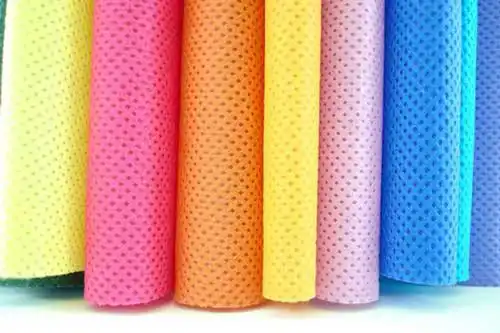
In recent decades, medical nonwoven fabrics have emerged as advanced materials with multiple applications in the fields of medicine and healthcare. These fabrics are not made from a mixture of natural or synthetic fibers; instead, they are formed from layered masses and possess unique characteristics that make them a powerful tool in medical environments.
The importance of using medical nonwoven fabrics in improving therapeutic and medical operations is very high due to their unique properties. These fabrics have the ability to absorb various fluids and allow the skin to breathe, characteristics that are effective in preventing infection, accelerating treatment, and enhancing the performance of medical processes.

:Characteristics of Medical Nonwoven Fabrics
Physical Properties: Medical nonwoven fabrics are composed of layered masses with a porous structure, which allows them to effectively absorb and store various fluids such as blood and urine. This feature also enables the skin beneath the fabric to be well-ventilated.
Chemical Properties: Some nonwoven fabrics contain specific chemical compounds that can act as antimicrobial agents. This property can be highly effective in reducing the risk of infection in medical settings.
Breathability: The design of breathable technologies in nonwoven fabrics allows them to reduce moisture and heat accumulation. This characteristic is crucial in preventing the creation of favorable environments for microbial growth and proliferation.
Ability to Absorb and Transfer Fluids: One of the important characteristics of nonwoven fabrics is their ability to absorb and transfer bodily fluids from the skin surface into the fabric. This feature can be very useful in emergencies or for wound treatment.
Role in Infection Prevention: Some nonwoven fabrics have disinfectant properties that are effective in reducing the number of microbes and bacteria in the covering and treatment environment. These characteristics are particularly important in surgical operations and wound care.
:Applications of Medical Nonwoven Fabrics
Use in Surgical Operations: Nonwoven fabrics are used in surgical operations as dressings, drapes, and other therapeutic tools. Due to their excellent fluid absorption and breathability, these fabrics contribute to improved surgical outcomes and patient recovery.
Treatment of Wounds and Burns: Nonwoven fabrics with antimicrobial properties and enhanced breathability are particularly effective in cases of open wounds and skin burns. They are used because they create a suitable environment for faster healing and treatment of wounds.
Specific Applications in Various Departments: Nonwoven fabrics play an effective role in various medical departments. For example, in urology, they are used to create pressure-reducing devices, and in orthopedics, for post-surgical dressings. They can also be used in medical masks, surgical caps, disposable surgical gowns, and so on.
The explanations provided relate to the primary applications of medical nonwoven fabrics. These instances alone demonstrate the breadth and diversity of applications for this type of fabric in the medical field.
:Innovations and Advancements
– New Studies in Nonwoven Materials: Numerous studies have been conducted to improve and enhance the properties of medical nonwoven fabrics. These investigations include increasing fluid absorption, improving breathability, reducing the risk of infection, and enhancing product durability.
– Development of New Technologies: Advanced technologies such as nanostructured coatings and polymeric technologies have been employed to produce nonwoven fabrics with improved properties. These advancements contribute to better performance and broader applications in medicine.
– Research on Innovative Materials: Materials produced through the integration of different fibers are new examples of nonwoven fabrics. These researches aim to improve efficiency, create unique characteristics, and enhance applications.
– Efforts to Improve Public Health: Improving the quality of medical nonwoven fabrics leads to improved public health. Features such as disinfectability, better breathability, and easier dressing changes result in better surgical operations and the lowest risk of infection.
Continuous research and efforts in this field contribute to improving public health and treatment.
:Products Made from Nonwoven Fabrics
– Production of Bandages and Dressings: Medical nonwoven fabrics are used as primary materials for producing various bandages and dressings. These products, utilizing the special properties of nonwoven fabrics such as fluid absorption, breathability, and disinfectant properties, accelerate the healing and treatment processes for patients.
– Medical Devices: New nonwoven material technologies are also used for producing medical devices. These devices can include respiratory components, drug pumps, disease control systems, and so on.
– Disinfectant Products: The production of products such as medical apparel and equipment with antimicrobial properties from nonwoven fabrics is also carried out. These products are very effective in reducing the risk of infection in medical environments.
– Rehabilitation Products: Nonwoven fabrics serve as important components in the production of rehabilitation products, such as muscle and bone support devices, playing a role in improving the function of rehabilitation patients.
:Challenges and Considerations
– Selecting Suitable Materials: Choosing the right materials for producing nonwoven fabrics with the required properties in different medical sectors is a fundamental challenge. Materials must possess both fluid absorption and breathability properties, as well as being disinfectant and sterilizable.
– Appropriate Design: The design of nonwoven fabrics based on user needs and the environments in which they are used is crucial. Incorrect designs can lead to problems such as lack of breathability or an increased likelihood of infection.
– Compliance with Standards: The production of medical nonwoven fabrics must comply with relevant health standards and regulations for the production and use of medical products. This issue is very important for gaining the trust of consumers and users of the products.
– Infection Problems: If nonwoven fabrics cannot properly act as antimicrobial agents or if microbes can proliferate on the skin due to moisture accumulation, there is a risk of infection in patients.
– Optimizing Efficiency: To optimally utilize nonwoven fabrics in medical processes, there is a need to improve and optimize their efficiency in various environments and considering different patient care needs.
These challenges highlight the necessity of adhering to specific criteria and health standards in the production and use of these types of products.
:Future and Leading Advancements
Development of Innovative Materials: Research in medical nonwoven materials is directed towards the development of innovative materials with improved properties. Increased fluid absorption, enhanced breathability, and reduced risk of infection are among the main goals in developing new materials.
Advanced Technologies: Improvements in production technologies allow for the creation of nonwoven fabrics with better and more diverse properties. Nanotechnologies and computational model analysis also contribute to leading advancements in this field.
Expanded Applications: Advancements in this field bring improvements in various applications such as disease treatment, facilitation of surgeries, and enhancement of healthcare processes.
Smart Fabrics: Combining nonwoven fabrics with smart technologies, such as sensors and integrated electronics, enables the creation of smart fabrics with special characteristics. These fabrics can contribute to significant advancements in medicine.
Improved Therapeutic Performance: With the advancement of medical nonwoven fabrics, therapeutic performance in various sectors is expected to improve, and patient recovery processes will accelerate.
Conclusion
This article examined the characteristics and applications of medical nonwoven fabrics. These types of fabrics, with their properties of fluid absorption, breathability, and resistance to infection, play a significant role in improving therapeutic processes. Research in technology and materials leads to improved properties of nonwoven fabrics and an enhancement of medical applications. The development of innovative materials and advancements in design accelerate efficiency in medical and therapeutic processes. This research points to the fundamental role of nonwoven fabrics in improving public health and their direction towards smart fabrics in the future.