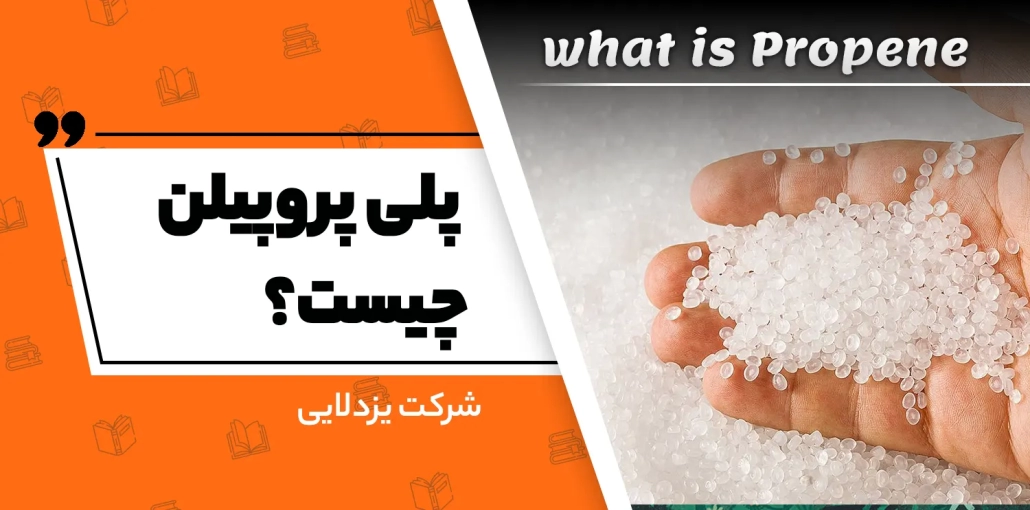
Today, various chemical substances are used around the world, each with its own specific characteristics. The production of these materials is carried out under the supervision of the best specialists to reduce the risks associated with their use. Propene or propylene is one of these widely used chemical substances.
You surely wonder what propylene is. Propene (commonly known as propylene), like ethane, is a major branch including a large number of chemical compounds that ultimately lead to the construction of the addition polymer, poly(propene). However, unlike ethane, propene quickly experiences substitution reactions, leading to the creation of a wide range of useful compounds.

In the following, accompany us in this article from the Yazd Laei website to thoroughly examine issues such as the general applications of propylene, how it is produced in various factories, the general characteristics of this important substance, and the hazards it poses to us and the environment.
Products made from propane (propylene)

Data for 2015, J.S. Platkens, The Propylene Issue, American Chemical Society, 2016.
In the first part of answering the question “what is propylene?”, we must mention the most important uses of this material for making other products. This will improve your understanding of the consumption pattern of propane in today’s industries, which is an important matter. Generally, the application of propylene in the production of other chemicals includes the following:
- Propanal (acrolein), which is converted into propionic acid (acrylic acid) and subsequently used to make acrylic polymers.
- Propionitrile (acrylonitrile), which is the monomer of poly(propionitrile).
- Cumene (benzene (1-methylethyl) or isopropylbenzene), which is used to produce phenol and propanone (acetone).
- Epoxypropane (propylene oxide), which is used to produce diols for making polyurethanes.
- Butanal (butyraldehyde) and consequently butanol, which are used as surface coatings.
The data in the image relates to global production. However, these data vary from country to country. For example, the ratio of poly(propene) usage in North America is only 55%, in Europe 57%, and 90% in the Middle East. The global usage ratio for producing epoxypropane (propylene oxide) is 7%, but 15% of propane in Europe is utilized for epoxide production. In the following, we will address the annual production of this important substance in response to the question “what is propylene?”.
Annual production of propane (propylene)
| World | 94 million tons |
| Asia and Oceania Open | 27 million tons |
| Europe | 15 million tons |
| United States | 13 million tons |
| Middle East | 7.5 million tons |
Production of propane (propylene)
Extensive research and development is focused on finding methods for producing propane without ethane. These methods are known as OPP processes.

Typically, propane is converted into propene through catalytic cracking. In the United States, propane is extracted from shale gas using the fracking process.
Another method is the MTP (methanol to propane) process, which is an example of the MTO (methanol to olefins) process (olefin being the old name for the homologous series related to alkenes). Methanol can be converted by dimethyl ether into high-purity ethene and propene. Methanol vapor passes over alumina at a temperature of about 600 kelvin. Ultimately, a balanced mixture of methanol, dimethyl ether, and water vapor is produced, containing about 25% methanol:

Then, this gaseous mixture passes over a zeolite bed with carbon atoms ranging from 2 to 8. This process is similar to the process used for producing hydrocarbons used in gasoline, the MTG (from methanol to diesel) process, which also affects the application of propylene.
Read more: Buy advertising handbag made with sanitary materials
Reaction between ethene and butenes
Another promising approach is a reaction that occurs between ethene and butenes:
Ethene can be obtained by dehydration of bioethanol using silica or alumina catalysts. Butenes (but-1-ene and but-2-ene) can be obtained by dehydration of biobutanol or via biowaste. Biobutanol is prepared from various sets of rhodium, titanium, and other metals; this is essential for answering the question “what is propylene?”:

Then, a mixture of ethene and butene is heated and passed over a solid catalyst based on organometallic compounds of molybdenum(IV) and tungsten(IV) (Schrock catalysts) and organoruthenium(II) compounds (Grubbs catalysts):

Small amounts of coke deposit on the catalyst and are removed again by passing hot air through the reactor. The first method accounts for approximately 56%, and catalytic cracking of diesel accounts for approximately 37% of global propane production. However, accompanying new processes are changing, and currently up to 15% of propane produced is formed with their help.
Another method for producing propane is using synthesis gas and ethanol. Synthesis gas (carbon monoxide and hydrogen) is used to convert bioethanol into propan-1-ol:

This reaction is carried out using a ruthenium-cobalt complex salt as a catalyst. A molybdenum-based catalyst is also currently in use:

Chemistry of ethene (ethylene) and propene (propylene)
All C-H bonds in ethene are very strong, and therefore most of its reactions involve addition to the double bond.
Read more: What is smart fabric?
Similarly, propene has 3 strong C-H bonds and experiences addition reactions (e.g., polymerization into poly(propene) and propene to epoxypropane).

However, the C-H bonds in the methyl group are weaker compared to those, and propene undergoes many reactions where the double bond is preserved and the methyl group experiences substitution reactions.

Production of epoxypropane (propylene oxide)
Epoxypropane is produced by three main methods:
The reaction of propene with aqueous chlorine to form a mixture of 1-chloropropan-2-ol (90%) and 2-chloropropan-1-ol (10%). Epoxypropane (propylene oxide) is formed by adding a solution of sodium hydroxide or calcium hydroxide. For example:

Reaction of propene with a hydroperoxide such as 1,1-dimethylethyl hydroperoxide.
What do you think “pressurized propylene” means? Under pressure, dimethylethyl hydroperoxide passes over a molten salt of molybdenum as a catalyst at a temperature of about 400 kelvin:

Reaction of propene with hydrogen peroxide. New factories have been built to produce large quantities of hydrogen peroxide. In these factories, peroxide reacts directly with propane, increasing the application of propylene:

Although hydrogen peroxide production is costly, large scale along with low costs associated with wastewater makes this new process very attractive.
Production of butanal (butyraldehyde) and butanol
Butanal is produced by passing propene, carbon monoxide, and hydrogen over a solid cobalt salt (a process known as the oxo process or hydroformylation):

More general applications for propylene
Propane is a suitable and important compound in the field of chemistry and industry. Some of the most important general applications of propane can be considered as follows:
- Polymer production: Propane is a key building block for the production of polypropylene, one of the thermoplastic polymers that is widely used. Polypropylene is used in packaging materials, textiles, automotive parts, and household goods.
- Fuel and energy: Propane can be used as a clean fuel in various processes.
- Chemical intermediates: Propane acts as an intermediate in the production of various chemicals such as propylene oxide, acrylonitrile, and butyraldehyde. These chemicals are used in the production of plastic, resin, coatings, adhesives, and synthetic fibers.
- Synthetic rubber: Propane is used to produce synthetic rubbers such as polyisobutylene and polybutadiene. These rubbers are used in tire production, sealing materials, and various elastomeric products. This option is important for answering the question “what is propylene?”.
- Solvent: Propane is used as a solvent in industrial applications, especially in the formulation of coatings, paints, inks, and cleaning agents. This is one of the most important types of propylene application that should be noted.
- Refrigerant: Propane is used as a component in some hydrofluorocarbon (HFC) refrigerant mixtures and has a lower effect on global warming (GWP) compared to older refrigerants such as hydrochlorofluorocarbons (HCFCs).
- It is also used in the manufacture of hygienic non-woven fabrics such as spunbond.
Other important matters
- Health: Propane is used in the production of medical polypropylene, which is applied in medical devices such as syringes, vials, and containers.
- Agricultural chemicals: Propane is used to produce agricultural chemicals such as herbicides and insecticides, helping to protect crops from pests and weeds.
- Flame retardants: Propane is a precursor for the production of flame retardants that are added to various materials to increase their resistance to fire.
- Fuel in aerosol products: Propane is used as a propellant in aerosol products, including personal care items such as deodorants, hair sprays, and air fresheners.
These items demonstrate the wide range of propane applications in various industries and turn it into a valuable and versatile chemical compound. Read more: What are natural fibers?
Complete chemical specifications
| Property | Value/Description |
| Chemical formula | C3H6 |
| Molecular weight | Approximately 42.08 g/mol |
| Structural formula | CH3CH=CH2 |
| IUPAC name | Propene |
| Common names | Propylene, methyl ethylene |
| Physical state | Colorless gas at room temperature |
| Odor | Slight, slightly sweet smell |
| Melting point | -185.2°C (-301.4°F) |
| Boiling point | -47.6°C (-53.7°F) |
| Solubility | Miscible |
| Flammability | Flammable gas |
| Vapor pressure | 480 kilopascals at 20 °C (68°F) |
| Reactivity | Generally stable, experiences addition reactions such as polymerization and oxidation. |
Production of propylene within our own country
What is the importance of propylene production? Despite the use of various technologies in propylene production, the industry for producing this valuable compound in Iran is not efficient. However, Iran, due to its valuable and cheap source of natural gas and favorable geographical position, has high potential for expanding and developing the propane production industry.
Hazards related to this substance
- Flammability and explosion hazards: Propane is highly flammable and can form explosive compounds with air. Even at relatively low concentrations, it can easily ignite when exposed to an ignition source, creating a significant risk of fire and explosion.
- Suffocation hazard: Propane is a simple asphyxiant, meaning it can limit oxygen in poorly ventilated spaces. This leads to oxygen deficiency and potential suffocation (if proper precautions are not taken).
- Health effects from inhalation: Long-term inhalation of propane vapor can lead to respiratory irritation, dizziness, nausea, and headaches. High concentrations may cause more severe effects, including problems with the central nervous system.
- Reactive polymerization: Propane can undergo spontaneous polymerization under certain conditions.
- Skin and eye burns: Direct contact with propane can cause skin irritation, redness, and even chemical burns.
- Environmental effects: Propane is a greenhouse gas and will increase air pollution. The release of greenhouse gases can have negative effects on air quality and contribute to environmental degradation.
- Incompatible materials: Propane can react violently with strong oxidizing agents such as chlorine or bromine and potentially cause fire, explosion, or release of toxic gas. But what are the other hazards of propylene?
Read more: What is viscose?
Other hazards
- Storage hazards: Due to its flammable nature, failure to follow appropriate protocols can lead to fire, explosion, and so on.
- Transportation hazards: When transporting propane, the risk of leakage increases, potentially endangering people and the environment.
- Occupational health hazards: Workers who use propane without proper protective measures are exposed to its hazards.
Final word
In this text, we tried to answer the question “what is propylene?”. As mentioned, this special substance, also known as propane, is one of the most essential chemicals in the current era with various applications. Individuals using propane must take all safety measures to protect themselves from its hazards.
Propane is produced by three different methods, about which we have also provided information. The special characteristics of propane have turned this substance into a distinct chemical product. If propane is used appropriately, its level of hazards can be significantly reduced, which is a positive aspect.
Based on the points mentioned, it can be stated that our country, Iran, has a very suitable position for producing this substance. If industries active in this field get involved, they could well capture the top position in propylene production in the Middle East or even all of Asia. We hope you enjoyed reading this content. Also, you can visit the Yazd Laei company’s products section to purchase all our products such as bulk disposable towels.